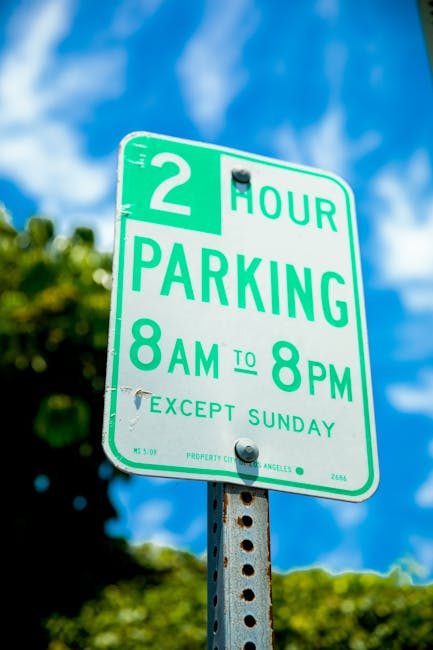
Do I Need a Permit? Enfield Council Removals Rules for Cockfosters
Posted on 26/06/2026
Moving home in Cockfosters can feel simple right up until the van is outside and the kerbside turns into the real problem. Do you need a permit? Will the vehicle fit? Is the loading bay free? And what happens if the road is busy, narrow, or partly shared with neighbours? If you are asking Do I Need a Permit? Enfield Council Removals Rules for Cockfosters, you are already thinking in the right way. A little planning now can save a lot of stress later.
This guide breaks the topic down in plain English. We will look at when a permit may be needed, why local rules matter, how removals are usually handled in the area, and what practical steps help you avoid delays. You will also find a checklist, common mistakes, and a clear example based on the kind of moving day people in Cockfosters often face.

Why Do I Need a Permit? Enfield Council Removals Rules for Cockfosters Matters
The short version: permits matter because moving vehicles do not exist in a vacuum. In Cockfosters, you may be dealing with controlled parking zones, bay restrictions, school-run traffic, narrow residential roads, shared access, or limited space for a removal van to stop safely. Even if your move is small, the wrong stopping position can create delays, neighbour complaints, or unnecessary fines.
To be fair, many people assume a removals company can just pull up outside and get on with it. Sometimes that works. Sometimes it really does not. Older terraces, apartment blocks, and busy local roads can all introduce issues that only become obvious when the van arrives and everyone is already carrying boxes. That is not the time to start wondering about parking rules.
It also matters from a planning perspective. If you are moving fragile furniture, a mattress, or heavy items, every extra metre between your front door and the van adds risk and time. A permit, a bay suspension, or a pre-arranged loading spot can make the day smoother and safer. If you are still in the packing phase, you may find our step-by-step packing guide useful before you even think about the vehicle.
There is another angle too: stress. People often underestimate how much of moving day is spent managing logistics rather than lifting boxes. When parking is sorted, everything tends to feel calmer. Less wandering. Less waiting. Fewer awkward conversations with drivers already stuck behind your van.
How Do I Need a Permit? Enfield Council Removals Rules for Cockfosters Works
Let's keep this practical. In many London moving situations, you need to check whether the removal vehicle can legally stop, wait, or load where you want it to. That may involve a council parking permit, a loading exemption, a suspended bay, or simply confirming that no permit is required because the street allows short-term loading at the time you need it.
The exact requirement depends on the street, the time of day, the size of the vehicle, and whether you are loading from the road, a bay, a private driveway, or an estate. Enfield Council rules can vary by location, so there is no safe one-size-fits-all assumption. In other words, your neighbour's moving experience is not your moving experience. Annoying, but true.
If you are using a professional crew, they will often help you think through the access side of the move. That said, the responsibility for parking compliance does not disappear just because a van is hired. It is still worth checking whether your property has any permit restrictions, if the road is monitored, and whether a loading bay needs advance arrangement.
For people moving flats, the situation can be a little more layered. Building management, concierge rules, or estate access controls may sit alongside council parking rules. If your move involves shared entrances or stairs, our flat removals support in Cockfosters may be relevant when you are planning how the day will actually flow.
A useful rule of thumb: if you are unsure whether a van can legally stop for the time you need, treat it as a permit question until proven otherwise. That mindset alone prevents a lot of last-minute scrambles.
Key Benefits and Practical Advantages
Getting the access and permit side right does more than keep you compliant. It makes the move cleaner, faster, and less physically demanding. Those are not fluffy benefits; they show up in the real world, usually at the exact moment you are carrying a sofa through drizzle while someone else is asking where the keys are.
- Less delay: the team can start unloading without circling the block or moving a van every few minutes.
- Lower stress: everyone knows where the vehicle is supposed to be and for how long.
- Reduced risk of damage: shorter carrying distances generally mean fewer bumps, drops, and awkward turns.
- Better timing: you can plan lifts, breaks, and building access with more confidence.
- Fewer parking disputes: neighbours, visitors, and other road users are less likely to be inconvenienced.
There is also a commercial benefit if you are comparing removal companies. Clear access information helps generate more accurate quotes. If a company knows the van may need special parking arrangements or extra carrying time, they can factor that in properly. That is one reason our readers often find the guide to hidden fees in removal quotes so helpful before booking.
And yes, sometimes a permit is the thing that turns a "manageable" move into a "this is actually fine" move. That small shift matters.
Who This Is For and When It Makes Sense
This topic is for anyone moving in or out of Cockfosters where a van cannot simply sit on private land the whole time. That includes house moves, flat moves, student relocations, office moves, and same-day jobs where speed matters and parking is tight.
You should be thinking about permits or parking arrangements if:
- your street has marked bays, double yellow lines, or timed restrictions
- you live on or near a busy road where stopping is limited
- your building has no private driveway or loading area
- you are moving bulky items such as wardrobes, beds, or white goods
- the access route involves stairs, courtyards, or a long walk from the road
- you are moving at a time when traffic and enforcement are more active
Students and renters often overlook this because they are focused on the deposit, the boxes, and the lease end date. Fair enough. But a student move can still go sideways if the van has nowhere legal to stop. If that sounds familiar, our student removals page for Cockfosters may be useful when you are organising a smaller, tighter move.
Office moves are another common case. The van may need to load near a commercial property with limited space, and a poorly timed arrival can get in the way of staff, deliveries, or pedestrians. In those cases, early planning is simply smart business.
Step-by-Step Guidance
If you want the practical version, here it is. This is the sequence that tends to work best for local moves.
- Check the property access first. Look at where a van can stop, how far the walk is, whether the route includes stairs, and whether the road is controlled or narrow.
- Identify any parking restrictions. Pay attention to resident bays, loading bays, time windows, and any signs near the kerb. Don't just guess. Signs are boring, but they matter.
- Confirm whether the removal vehicle needs special arrangements. A small van may be fine in one street and awkward in the next. Vehicle size changes the picture.
- Book or arrange the permit early if needed. Avoid leaving this until the evening before. Last-minute arrangements can be limited or unavailable.
- Share the details with your movers. Tell them about stairs, limited turning space, narrow access, and any time limits.
- Prepare the property for loading. Keep doors open where safe, set aside parking space if allowed, and have keys, labels, and essentials ready.
- Build a backup plan. If the nearest bay is full or the weather turns bad, decide in advance where the van can safely wait.
A lot of people skip step 2 because they assume it will be obvious on the day. It usually is not. Evening light, rain, parked cars, and a bit of moving-day chaos can make a simple street look completely different.
If your move includes large furniture, the carrying plan matters just as much as the parking plan. Our article on solo heavy object lifting techniques offers useful context on safe handling, while the practical furniture-focused option is furniture removals in Cockfosters.
Expert Tips for Better Results
Here are the things that tend to make the biggest difference, especially in Cockfosters where roads and property layouts vary quite a bit.
- Check access at the same time of day you plan to move. Morning and late afternoon can feel like two different streets.
- Measure the van space mentally, not just the room size. A loading spot may look generous until another car parks beside it.
- Leave a little time cushion. Ten spare minutes can save you from one bad parking choice.
- Keep neighbours in the loop if the road is tight. A quick word often prevents a lot of friction.
- Separate the items that need the van closest to the property. Fridges, beds, and heavy cabinets should not be the last things you discover.
One small but useful habit: walk the route from front door to van before the crew arrives. You will notice things you missed the night before, like a gate that only opens halfway or a stairwell that is tighter than expected. It is such a simple thing, and yet it helps.
If you are moving a mattress, timing and handling matter even more because these items are awkward in narrow hallways. The bed and mattress relocation guide is a handy companion piece. For unusually heavy items, especially anything that should not be rushed, our piano removals service shows the kind of care that complex items require.

Common Mistakes to Avoid
Most permit-related moving problems are completely avoidable. They happen because people are busy, not because they are careless. Still, the outcome is the same: lost time, extra walking, or a bad mood nobody wanted.
- Assuming no permit is needed because the road "usually looks free." Free-looking roads can still have restrictions.
- Leaving parking decisions until the van is already en route. That is how stress multiplies.
- Forgetting about loading times. A space that is fine for five minutes may not be fine for ninety.
- Ignoring estate or building rules. Council rules are not the only rules that matter.
- Underestimating the space needed for a larger van. Big vehicles need more room to manoeuvre and unload.
- Not telling movers about access issues early. By the time the team arrives, it is too late to redesign the day.
Another common slip is forgetting what to do with bulky items you are not taking. If you leave an old sofa or broken wardrobe for "later," later has a habit of becoming a problem. Our guide on bulky waste after a Cockfosters move is a useful read if you are trying to keep the move tidy and sensible.
And if you are moving quickly, perhaps because exchange dates shifted or a tenancy ended sooner than expected, the page on urgent same-day moves in Cockfosters is worth a look. Speed is fine. Randomness is not.
Tools, Resources and Recommendations
You do not need a toolkit the size of a warehouse, but a few basic resources help a lot.
- Printed notes or a phone checklist for parking restrictions, arrival times, and building access
- Box labels so the unload is faster and less messy
- Protective blankets and straps for furniture and fragile items
- Measuring tape to confirm whether larger items will fit through doors and stair turns
- Contact details for your building manager or landlord if access needs approval
For the packing side, the packing and boxes service is a practical place to start if you want decent materials without overcomplicating the job. If you are between homes for a while, storage in Cockfosters can be helpful, especially when move dates do not line up neatly.
There are also a few pages that support the broader moving process: services overview, insurance and safety, and recycling and sustainability. They are good background reads if you want a fuller picture before booking.
Law, Compliance, Standards, or Best Practice
When people ask about permits, they are usually asking a legal or compliance question in plain clothes. The safest approach is to treat parking, loading, and access as part of your move planning rather than a side issue.
Best practice in the UK moving context usually means:
- checking local parking controls before the move
- making sure the vehicle is stopped legally
- avoiding obstruction to traffic, driveways, and pedestrian access
- following any building or estate rules that apply to removals
- keeping the moving team informed about site conditions and risks
It is also sensible to work with providers who take safety seriously. Clear communication, careful lifting, and proper handling all sit alongside parking compliance. If you want to understand how a professional operator frames those responsibilities, our health and safety policy and terms and conditions give you a better idea of the standards involved.
One more thing. Compliance is not only about avoiding fines. It is about keeping everyone safe: the crew, neighbours, pedestrians, and your own belongings. That's the bit people remember after the boxes are unpacked.
Options, Methods, or Comparison Table
There are usually a few ways to handle access on moving day. Which one makes sense depends on the property and the street.
| Option | Best for | Pros | Watch out for |
|---|---|---|---|
| Street loading with no permit | Quiet roads or short stops where allowed | Simple, quick, low admin | Can fail if restrictions apply or space disappears |
| Parking permit or bay arrangement | Controlled roads and longer loading windows | More predictable access | Needs checking and often advance planning |
| Private driveway or forecourt | Homes with off-street space | Closest and easiest access | May still need careful vehicle positioning |
| Alternative loading point | Busy roads or tight estates | Flexible fallback option | May add carrying distance and time |
If you live in a flat or on a road where access is cramped, the comparison often comes down to convenience versus certainty. A private space is ideal, but not everyone has one. In those cases, a permit or arranged loading point is often worth the effort.
For people choosing between different move styles, our man with a van in Cockfosters and man and van in Cockfosters pages are useful references for understanding smaller, more flexible moves, while house removals in Cockfosters is a better fit for larger household moves.
Case Study or Real-World Example
Imagine a family moving from a first-floor flat near a busy residential street in Cockfosters. They have a sofa, a dining table, two beds, a washing machine, and a stack of boxes that seemed smaller at 8pm than they do in daylight. The van can park, but only for limited loading where space is shared with other vehicles.
If they do nothing in advance, the morning turns into a waiting game. The van arrives, another car is already in the ideal spot, and the crew has to walk items farther than expected. That means more time on the stairs, more lifting, and more chance of a scratch on a wall or furniture leg. Not ideal.
Now picture the same move with a proper plan. The access point is checked the day before. Parking restrictions are noted. A backup spot is identified. The team knows in advance that the sofa needs a careful carry and the mattress must be protected. The van stops once, the unloading starts immediately, and the whole thing feels steady. Not glamorous. Just efficient.
That is really what permit and access planning does. It removes friction. Sometimes the difference is only twenty minutes. Sometimes it is the difference between a calm move and a slightly chaotic one, with everyone talking over each other and nobody quite sure who moved the kettle.
For one household we often hear about in similar local situations, a short move from the Trent Park side of Cockfosters works best when the team has a clear route and a clear loading spot. If you are preparing for that kind of move, the Trent Park removals checklist and staircase moving tips for older Cockfosters homes are both worth reading.
Practical Checklist
Use this before move day. It is simple, and it works.
- Check whether your street has parking or loading restrictions
- Confirm if a permit, bay suspension, or loading arrangement is needed
- Tell your removal team about stairs, narrow access, or shared entrances
- Measure large furniture and doorways if needed
- Set aside items you want loaded first
- Label boxes clearly
- Keep keys, documents, and essentials in one separate bag
- Arrange a fallback parking option in case the main spot is occupied
- Let neighbours or building management know if access may be affected
- Prepare for bulky items and decide what will be recycled, sold, stored, or disposed of
If your move includes a piano or anything similarly awkward, do not leave that item to chance. Heavy specialist items need different handling. There is a reason DIY piano relocation is usually not worth it and why specialist planning exists in the first place.
One last practical note: if you are choosing a removal company, ask them how they want access details presented. Some will prefer a quick street-level description. Others will want photos. Either way, the clearer your notes, the better the day runs. Simple, really.
Get a free quote today and see how much you can save.
Conclusion
So, do you need a permit? Sometimes yes, sometimes no, and often the answer depends on the exact street, time, and vehicle setup. That is why Do I Need a Permit? Enfield Council Removals Rules for Cockfosters is such an important question to ask early. It is not just about avoiding a parking problem. It is about making the whole move smoother, safer, and far less rushed.
If you take one thing from this guide, let it be this: check access before the boxes are sealed. It sounds obvious, but in the real world people forget. Then the van arrives, the road is busier than expected, and suddenly everyone is doing mental gymnastics about where to stop. Best not.
Plan the parking. Plan the lifting. Plan the unload. The rest tends to fall into place.